
Introduction
So it’s the eve of the registration deadline (tomorrow night, 11:59pm), and just under 3 weeks until the general election itself. As someone that enjoys and keeps up with politics, the last few weeks have been both tedious and tiresome. Mainstream media have been busy with its right winged propaganda whilst social media has been inundated with its left winged counterpart (of which I have also been guilty of). In the age of ‘alternative facts’ and information bombardment, it has become increasingly hard to form an informed opinion. What’s more is that it seems that there is no longer any room for rational debate, opinion is no longer separated from the person. The topic of politics is a taboo, with character assassination becoming increasingly more prevalent rather than the objective scrutiny of policies.
There will be a fair few people who will still be undecided on which way they will vote. This should not be an opportunity for us to instantly force our bias and agenda upon them… I am myself fairly left in my politics, with my key concerns being the underfunding of the National Health Service, social care and disability benefits (amongst many others)… however, it would be extremely ignorant of me to assume everyone has the same beliefs and rank them in the same order of importance as I do.
Therefore, my aim is to try and provide an informative pathway to help guide people to find the correct choice based on their own beliefs.
The first step is to register to vote, I feel everyone should exercise their right to vote. Even if it means spoiling your ballot paper. I cannot stress enough how much it infuriates me when someone says “well you can’t blame me because I didn’t vote.” Yes, yes I can! Someone having a different opinion to me isn’t the problem. Apathy, however, is and it’s inexcusable! So please at the very least register to vote by 11:59 the 22nd of May. It literally takes less than 5 minutes.
Figure 1 shows the percentage of the people registered onto the electorate but did not exercise their right to vote vs. the vote percentage for each of the major parties in the 2015 general election (Reference). As you can see the non-voters could have had a major say in the last general election.
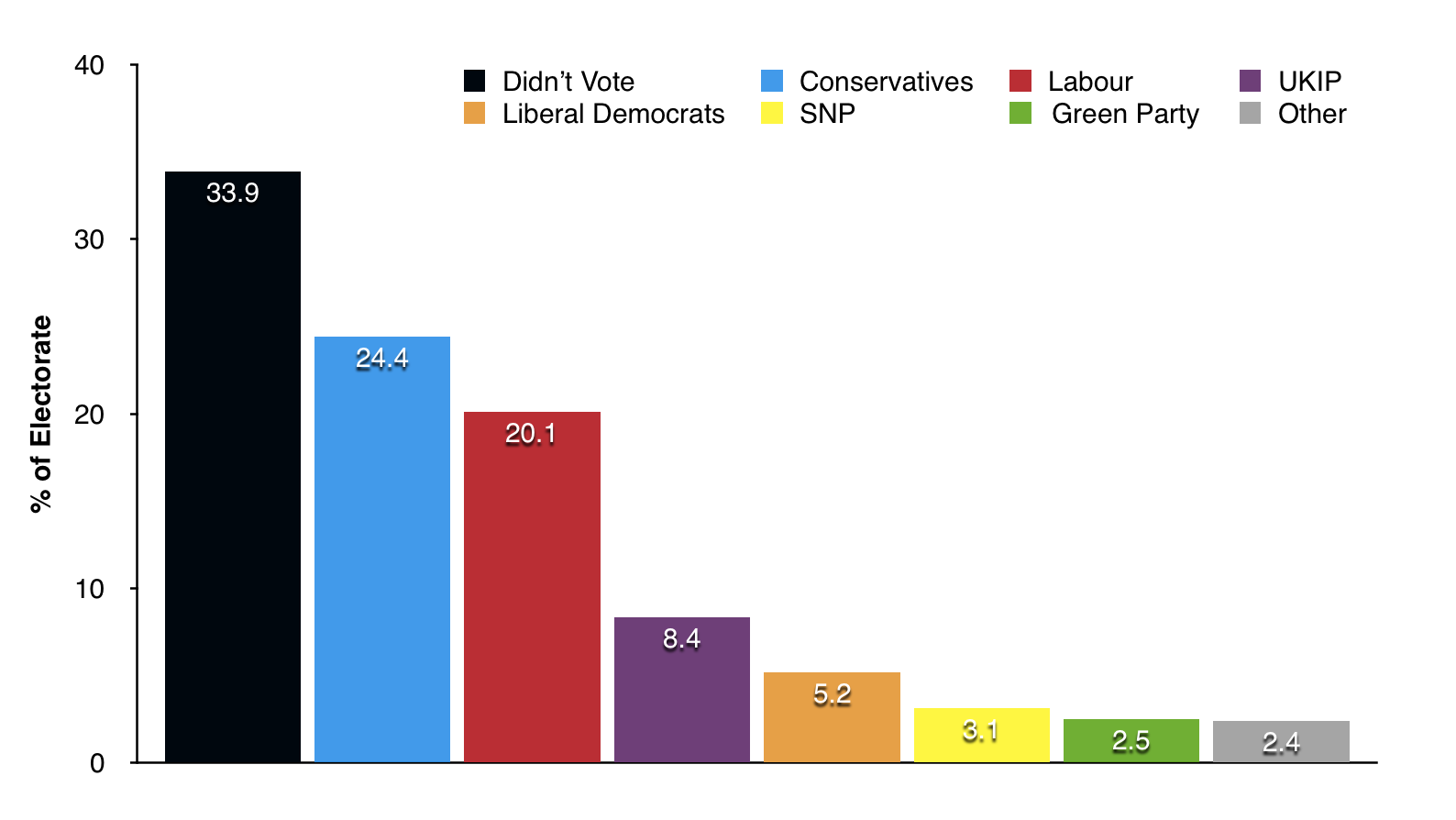
Figure 1: Showing percentage of electorate who didn’t vote vs. percentage party vote (Click to Enlarge)
N.B. If you don’t have your polling card yet, it’s likely you’re not yet registered.
Finding the Right Party for You
The next important thing is to find a party who matches your opinions. Each party should have a manifesto, however, these are usually over 100 pages long and tend to use smoke and mirror tactics instead of informative information. Very few people have the time to read these and will probably be more confused than ever if they did.
My recommendation is to utilise the online questionnaires which focus on key areas. These allow you to provide answers to questions that you believe to be the best options. Some also allow you to rank each issue on how important each issue are to you. The results will show which party best represents your beliefs from your answers. This will get you out of the starting blocks and give you a direction for research. I would recommend doing multiple tests for an increased accuracy. Below are 4 sites I have used and have found quite useful:
Further Research your Local Area, and MP.
Once you have found the parties that you feel you’re most in line with, it would be an idea to research your local area. This will be the MP and seat you will be voting into parliament. Remember, you’re not actually voting for Corbyn, May et al., (unless they are your local MP) but for your local MP. One of the best things to research would be what your local MP has voted for and against in the past and see if they match what you would have voted if you were in similar position.
Finally, you could look up past results of your local constituency via the electoral calculus. This will show how popular each party has been in the past. If you are still struggling to choose between two parties you can see which party has been historically more popular in the area and thus more likely to gain/hold the seat. This is also useful if your motivation is to try and keep a party out, rather than voting a party in. You can look at their direct competition within your area.
I hope this has proven useful, feel free to comment and share. I cannot stress enough, everyone has a right to vote, everyone has a right to an opinion and choice, not everyone is going to have the same opinion and choice. Just make sure you’re certain that you’re making the right choices for you and your family. 5 years is a very long time! Happy Voting!
 Running onto Something Different