Introduction
In or Out? This is a question on many people’s lips, with the undecided being set upon by the decided. There has been a lot of scare mongering from either side of the campaign. Which in turn has caused some truths to be listed within the same category… it’s been extremely hard to ascertain fact from fiction, manipulated figures from legitimate figures, each side has had their own motivation or agenda. My aim is to look into the key popular arguments and dig to the truth which our politicians seem set against in doing.
I implore you to read to the end, It is imperative that you know exactly what you are voting for! I don’t want to be a part of a generation to potentially jeopardise the economy and living for the generations to follow us…
I would also like you to forgive my poor writing style, it’s been a long time since I have written a report and I’m not the most literate in the first place. I would also hasten to add that I have been writing the bulk of this in my breaks during my night shifts… so bear with me…
The Fee/what do we get?
The leave campaign states in their ‘VOTE LEAVE’ leaflet:
“The EU costs us at least £350 million a week”
This figure is very misleading, this fee constitutes to £18 billion a year, a fee we never actually pay, due to an immediate rebate of £5 billion, making the annual fee £13 billion. the EU also pays a further £4 billion to the public sector, this is in the form of payments to the poorer regions of the UK and Farmers within the UK. Thus once calculating the net contributions from either side, the fee stands at ~£8.5 billion per year. that’s under half the original figure quoted in the Leave Campaign. Figure 1a illustrates the breakdown of the fee, whilst figure 1b shows the Net Contribution of 2015. It’s also worth to note that the EU also pays to the private sector, in the form of research grants, in 2013 it was reported that the EU paid an estimated £1.3 billion to the UK’s private sector so that contribution fee could potentially be further reduced (Reference).
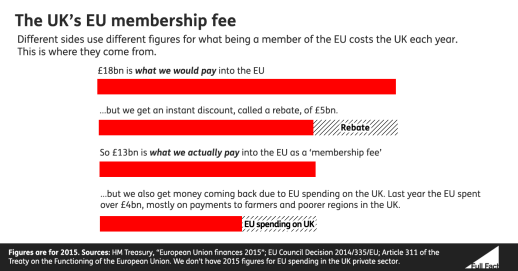
Figure 1a: Shows how the rebate and public sector payments affect the contribution fee
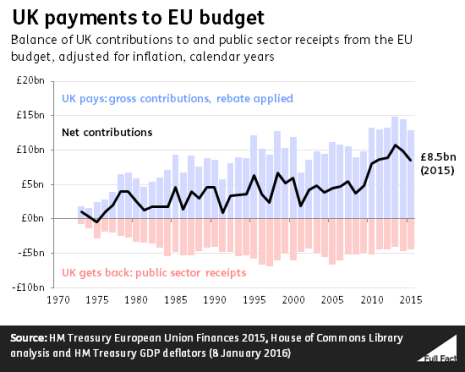
Figure 1b: Shows the Net UK-EU Net contribution in 2015
Just to show how much of the UK’s budget this takes up, The BBC recently published HMRC’s ‘Example of the Government’s annual tax summary’ shown in figure 2 (Reference), The NET contribution to the EU is 0.3% of GDP in 2014 (Reference). The leave campaign note that they can use this money to invest in the Health and Education Sectors. Even if they did intend to do this (I have my suspicions) I don’t think that 0.3% of GDP would make up an iota of difference, especially when you think that the poorer regions and farmers lose out on £4 billion a year, that they will not receive from the EU if we leave. So only a measly £4.5 billion can be shared out for the health and education sectors. Furthermore, independent experts have noted that between £20-40 billion worth of damages would need to be paid if UK were to vote leave (Reference). The same report also hypothesises that the deficit currently expected to be paid off by 2019-2020 may not be cleared if EU exit were to happen. All so we can save between £4.5-8.5 billion…
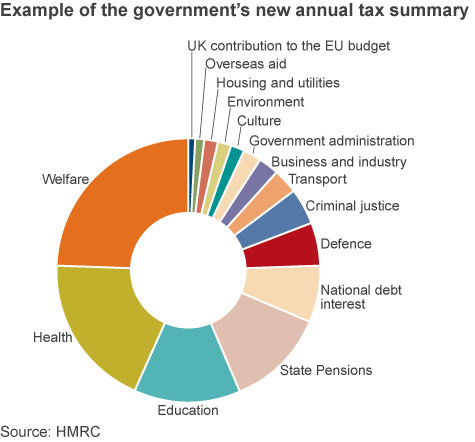
Figure 2: Shows the Government’s annual tax summary of 2014
In Summary, Yes the UK does suffer a loss in contribution fees for it’s EU membership, but not to the extreme that the leave campaign has been on record to saying, in fact, the figure is >50% less than the £18 billion figure quoted.This is before tourism trade from the free movement of EU visitors and ourselves going on holiday (not having to fork out for a travel visa to go to Ibiza, Prague or Paris). In fact, the £8.5 billion is actually less than the £9 billion average NET Contribution paid since 1973 (Reference). Some have quoted that it roughly costs 40p per person per day (Reference), that’s less than a can of coke (Reference)…
Immigration
This has been another one of the key debates within this referendum campaign, with the ‘VOTE LEAVE’ leaflet stating:
“Over Quarter of a million people migrate to the UK from EU every year, having impact to public services”
Let’s look into this, The telegraph note that Immigration has cost the Exchequer £1.2 billion last year (Reference), this, however, is a one-sided figure as it does not add in what immigration contributes to government revenue. It’s essentially like stating that a railcard costs £30 and not adding how much you save through using it…
The Economist reported that when EU migration cost and contribution were calculated, a positive NET Contribution was estimated at £4 billion, between periods of 1995-2011. Whereas Britons had a negative NET contribution of £591 billion for the same time period. In recent years, Eastern Europeans have gained the brunt of this immigration debate. In the same article, the Economist reports that since 2004 eastern Europeans have contributed a net contribution of £5 billion, and even in the worse years of the recession during 2007-2011 showed a positive NET contribution of £2 billion. with other migrant workers from other EU countries contributing a further £8.6 billion in this period (Reference).
So it’s clear to see that EU migrant workers contribute to the economy in taxation, so the next point is the drain and extra demand on public services and welfare. The Guardian reported earlier this year that only 4.5% of migrants claimed out-of-work benefits and ~15% claimed tax credits last year. This means that ~80% of migrants were in high paid jobs and contributing fully to the country. The article also reported that more than 60% of new migrants (~900,000) from southern and eastern Europe that work in this country are also University Graduates, with a further 25% being Eastern European graduates ( a similar proportion to UK born population). This suggests that much of the EU migration are skilled workers and would be granted immigration status irrelevant of the EU free movement (Reference).
The NHS also benefits from EU freedom of movement, ~5% of NHS workers (of which >10% are doctors and 4% are nurses) are EU migrants according the English Health Service’s Electronic Staff Record (Reference). It is reported that ~5% of the English population are EU migrants, thus, again Migrants contribute to the NHS at the same rate of permanent residence (Reference).
In summary, EU migrants contribute both economically and within the NHS, with only 4.5% of workers on out-of-work benefits, which with the new reform recently negotiated within the EU parliament, means that EU workers will need to have worked in the UK and contributed to government revenues for 4 years, before they can claim tax-related benefits and credits, minimising that figure furthermore if we were to Remain.
Input of UK Laws
Finally the last key point I have seen argued and again is written in the ‘VOTE LEAVE’ leaflet is:
“EU Law overrules UK Laws”
Although it’s hard to put an exact number to how many laws the EU ‘overrule’, The house of commons library reports that true for ~7% of the UK’s laws (Reference). The UK has control of its own Budget and how it divides it’s money within the public sector (see figure 2), and also governs minimum wage.
Official EU voting records actually suggest that since 1999 UK ministers have been on the ‘winning’ side 95% of the time when it comes to implementing EU laws, with the other 5% being made up through abstaining and ‘losing’ (3% and 2% respectively). Not only have the UK ministers agreed with these “unreasonable” laws 95% of the time, but the UK government also has the power to influence these policies in the early stages of negotiations in the legislation’s draft (Reference). Unfortunately, the records only show laws that have eventually passed, so there is no evidence to show how many laws the UK managed to successfully oppose or unsuccessfully ascertain.
So let’s look at some of the legislation the UK are ‘bound’ to from the EU:
The Environment
The House of Commons Library states; EU legislation sets limits for a range of air pollutants that all member states of the EU need to abide by. The UK failed to do this is 40 of our air quality zones and had to appear before the supreme court and led to a unanimous judgement that they draft up new plans to combat the reduction in air quality (specifically NO2) by the end of 2015, which the government implemented. The EU have a number of other Environmental directives that the UK must abide by including, waste, water quality, and chemicals (Reference).
The UK also have to abide by the renewables directive (2009) meaning by 2020 the UK must get 15% of its energy from renewable sources, which was at 2.4% in 2008. In 2013 it had been increased to 5.2%. An EU exit would put all of this in question. after all, we all share the same environment as everyone else, unfortunately, the air pollutants don’t share the same border controls as we do. Thus, it seems that we should all have the same targets and work together to improve this, learn from each other on best ways. Finland, Germany and Sweden have accelerated EU progression who are known to be more environmentally progressive (Reference).
Employment/Workers Rights
The House of Commons Library states; that an EU exit could “foreshadow significant change to UK employment law” much of which has stemmed from EU legislation. This includes:
- Annual Leave
- Worker Rights (full-time, part-time, fixed-term & agency)
- Collective Redundancy
- Maternity, Paternity and Parent Leave
- Protection of employment under the transfer of business
- Anti-Discrimination legislation
an EU exit could result in going backwards in this progression, the current government were originally against this ‘Social Policy’ (Reference) and I do not feel that they are not beneath going against this, they have already cut junior doctors wages (Reference), cut nursing bursaries (Reference) and cut disability benefits (Reference). Do we really want these people in charge of our annual leave, maternity and paternity pay too?
High profile people backing Remain and Leave:
Finally again in the ‘VOTE LEAVE’ leaflet it claims:
“Experts, Politicians and businesses are divided”
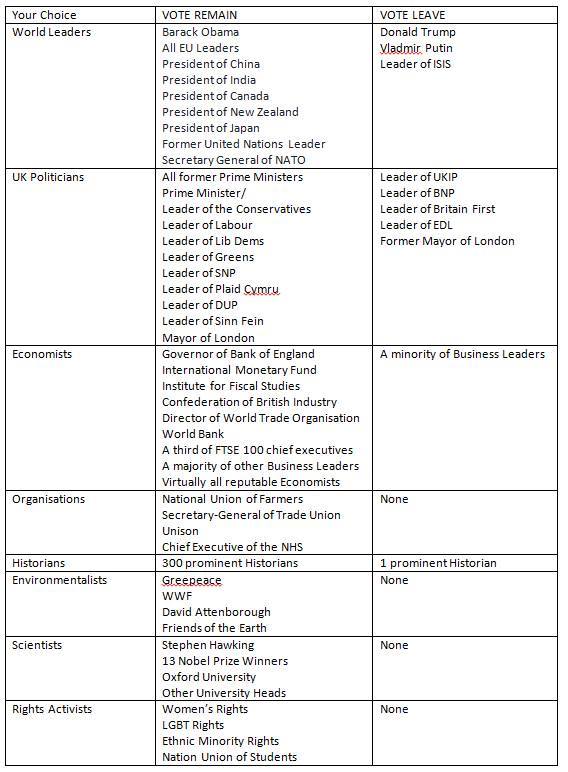
Figure 3: Team Remain vs. Team Leave
Personally, I don’t see much of a divide…
Remember if you’re still not sure, think of this; it will be easier to leave the EU after voting remain than it will be to rejoin EU after voting leave, think of the generations of children that will come after us. The SNP are proving that their independence referendum can still happen again, so can an EU referendum to leave. Don’t think that it will be that easy to rejoin.


 Running onto Something Different